


The biggest myth I hear is that pregnancy means you have to give up active skincare altogether and spend nine months using nothing more sophisticated than a basic moisturiser. You absolutely do not. Pregnancy safe does not have to mean inactive or ineffective.
Women often stop everything because they are understandably frightened of getting something wrong. In reality, there are many excellent ingredients that can continue to work on the things women care about, including acne, pigmentation, hydration, skin barrier function, glow and collagen support. Hyaluronic acid, niacinamide, azelaic acid, peptides and appropriate antioxidants can all play an important role. Even some acids are not automatically forbidden. The American Academy of Dermatology, for example, includes glycolic acid within pregnancy skincare advice, while azelaic acid is considered an appropriate acne treatment during pregnancy.
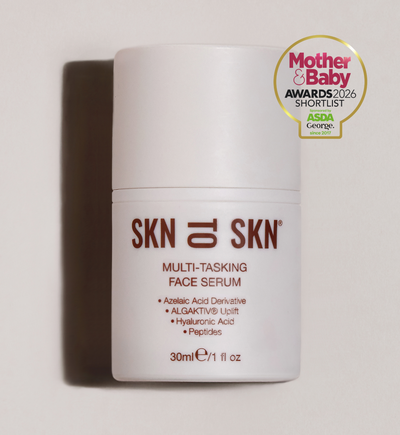
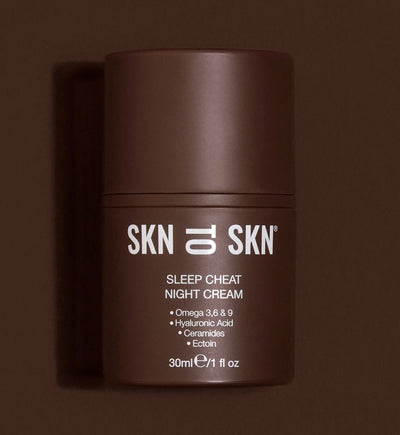
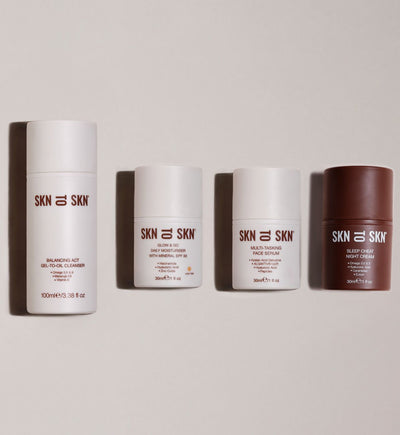
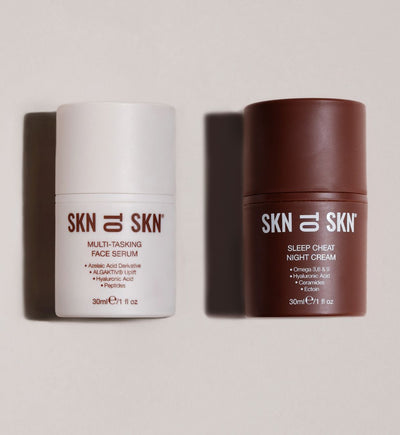
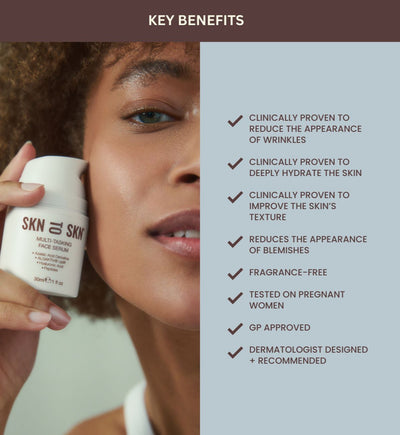
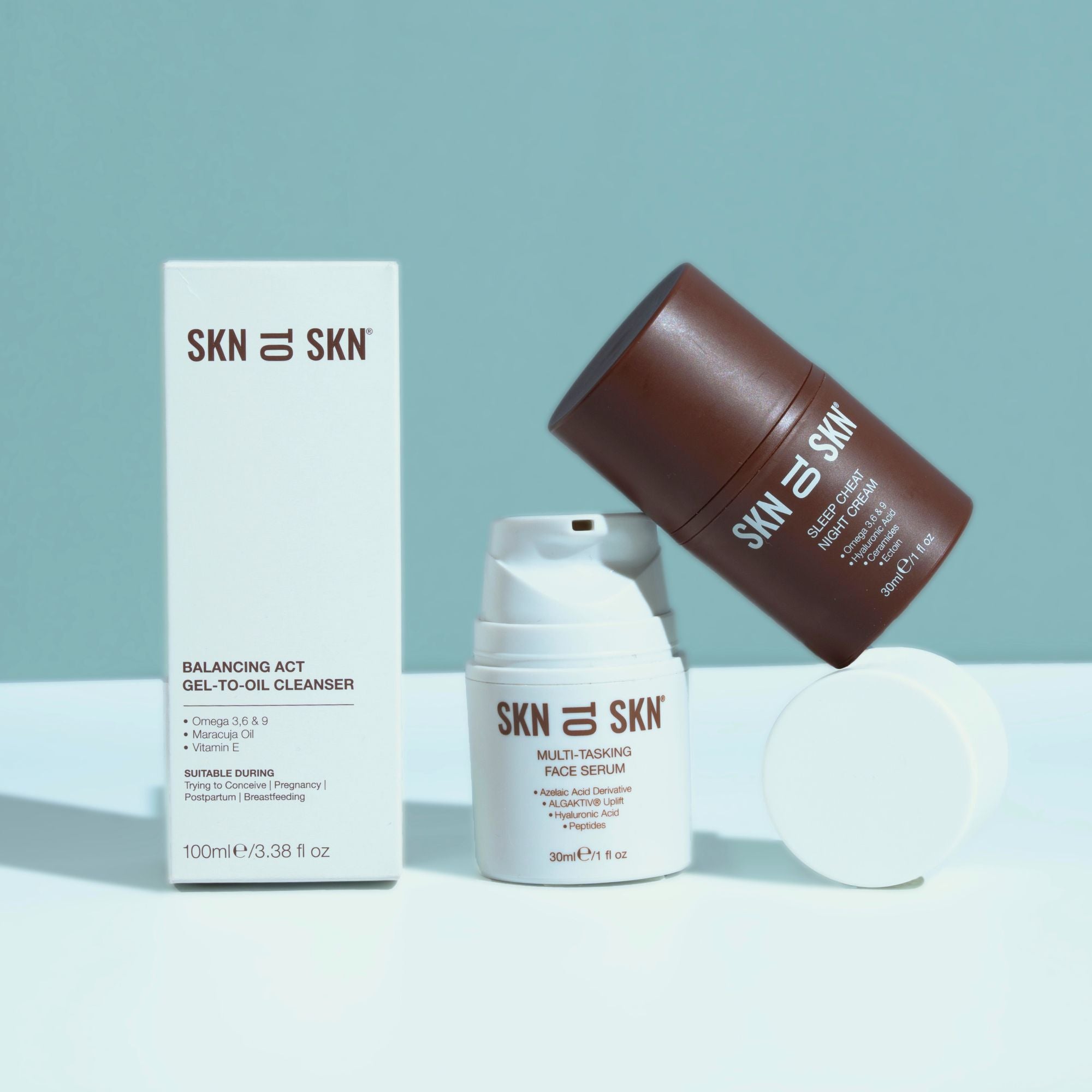
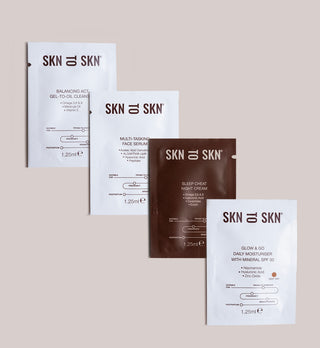
I particularly like peptides and antioxidants as retinoid alternatives during this period because women can continue their collagen banking journey rather than feeling that their skincare has to go into hibernation for pregnancy and breastfeeding. This was one of the principles I loved when helping to formulate the SKN TO SKN range. The Multi-Tasking Face Serum, for example, combines peptides and astaxanthin with niacinamide, hyaluronic acid and an azelaic acid derivative, so women can still target texture, inflammation, hydration and skin quality without relying on retinoids.
What to avoid using during pregnancy.
At the other end of the spectrum, the ingredient I most want women to recognise is a retinoid. Retinol can appear in very familiar beauty products and women sometimes assume that because something is bought as a cosmetic rather than prescribed as a medicine it must be fine. Retinol, retinal and prescription topical retinoids should all be put aside when planning a pregnancy and throughout pregnancy.
My overall message is therefore much more positive than a long list of things women cannot use. Pregnancy is not the end of good skincare. It is simply a time to understand your ingredients, swap a small number of unsuitable actives for intelligent alternatives and continue looking after your skin beautifully.
 Written by Professor Caitriona Ryan, MD FRCPI FAAD
Consultant Dermatologist, Institute of Dermatologists® and Blackrock Clinic
Clinical Professor, University College Dublin