




Many of us wake up looking a little puffy, especially after a late night, a salty meal, or broken sleep. But it’s not something we often fully understand. Professor Caitriona Ryan, consultant dermatologist, explains what’s happening and which approaches are actually backed by evidence.
What Causes Facial Puffiness in the Morning?
Facial puffiness is a common concern, particularly on waking. It usually reflects fluid retention rather than fat, with contributing factors including salt, alcohol, poor sleep, allergies, sinus congestion, hormonal changes and ageing-related slowing of lymphatic drainage. While many products and techniques promise results, only a few are reliably effective.
Facial puffiness is a common concern, particularly on waking. It usually reflects fluid retention rather than fat, with contributing factors including salt, alcohol, poor sleep, allergies, sinus congestion, hormonal changes and ageing-related slowing of lymphatic drainage. While many products and techniques promise results, only a few are reliably effective.
What Ingredients Actually Reduce Facial Puffiness?
Caffeine is one of the most evidence-supported ingredients for facial puffiness. Applied topically, it constricts blood vessels and reduces fluid leakage into surrounding tissue, making it particularly helpful for under-eye swelling. The effect is modest but visible.
Caffeine is one of the most evidence-supported ingredients for facial puffiness. Applied topically, it constricts blood vessels and reduces fluid leakage into surrounding tissue, making it particularly helpful for under-eye swelling. The effect is modest but visible.
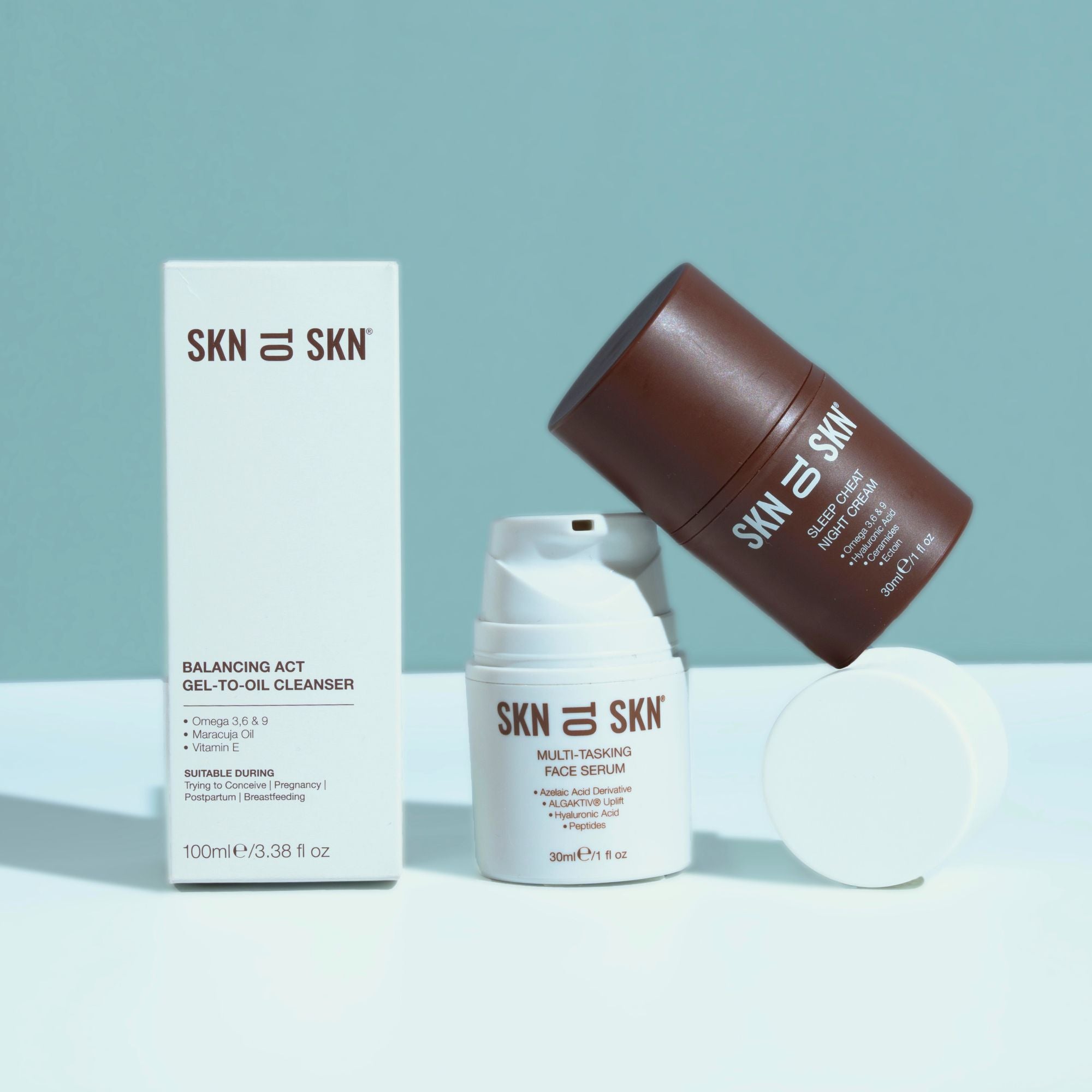
Niacinamide can also help, though indirectly. It strengthens the skin barrier and reduces inflammation, which can limit fluid leakage over time. This is most useful for people whose puffiness is linked to irritation, sensitivity, or inflammatory skin conditions. It does not produce an instant depuffing effect, but regular use can make the skin less prone to swelling. A great daily moisturiser that includes niacinamide is the SKN TO SKN Glow & Go Daily Moisturiser with Mineral SPF30, which combines hydration, barrier support and SPF protection with niacinamide and hyaluronic acid - ideal for morning skincare.
Beyond these ingredients, many creams promise dramatic depuffing but deliver little. Skincare can support skin health, but it cannot permanently alter fluid movement in the face.

Does Lymphatic Massage Help Reduce Puffiness?
Gentle lymphatic massage can reduce puffiness by encouraging fluid drainage, particularly around the eyes and jawline. Pressure should be light and movements slow. Aggressive massage can actually worsen swelling. Some facial tools can help with this gentle technique, but avoid forcing products if they don’t contain ingredients suited to this purpose.
Gentle lymphatic massage can reduce puffiness by encouraging fluid drainage, particularly around the eyes and jawline. Pressure should be light and movements slow. Aggressive massage can actually worsen swelling. Some facial tools can help with this gentle technique, but avoid forcing products if they don’t contain ingredients suited to this purpose.
Can Cold Exposure Reduce Puffiness?
Cold exposure can temporarily reduce puffiness by constricting blood vessels. Chilled eye products or cool tools can be helpful for short-term improvement, such as before an event or filming. However, the benefit is fleeting and repeated icing or prolonged ice facials can irritate the skin, worsen redness and aggravate conditions such as rosacea. Extreme cold is not recommended as a regular practice.
Cold exposure can temporarily reduce puffiness by constricting blood vessels. Chilled eye products or cool tools can be helpful for short-term improvement, such as before an event or filming. However, the benefit is fleeting and repeated icing or prolonged ice facials can irritate the skin, worsen redness and aggravate conditions such as rosacea. Extreme cold is not recommended as a regular practice.
How Does Sleep Affect Facial Puffiness?
Sleep quality and sleeping position are often overlooked. Poor sleep increases inflammation and lying flat allows fluid to pool in the face. Slight head elevation can significantly reduce morning puffiness.
Sleep quality and sleeping position are often overlooked. Poor sleep increases inflammation and lying flat allows fluid to pool in the face. Slight head elevation can significantly reduce morning puffiness.
Treating allergies or chronic sinus congestion is also essential for many people.
To help skin look more rested and supported overnight, consider using a nourishing night cream such as the SKN TO SKN Sleep Cheat Night Cream, which deeply hydrates, repairs and restores the skin barrier - designed to make skin look refreshed even if sleep has been interrupted.

The Bottom Line
Morning facial puffiness is common and usually temporary. It is mostly caused by fluid retention rather than fat and certain approaches are backed by evidence. Using caffeine for under-eye swelling, strengthening the skin with niacinamide, performing gentle lymphatic massage, applying short-term cooling, improving sleep quality and managing allergies or sinus congestion can all help reduce puffiness.
While skincare supports overall skin health, it cannot permanently change how fluid moves in the face, so realistic expectations are important.
Morning facial puffiness is common and usually temporary. It is mostly caused by fluid retention rather than fat and certain approaches are backed by evidence. Using caffeine for under-eye swelling, strengthening the skin with niacinamide, performing gentle lymphatic massage, applying short-term cooling, improving sleep quality and managing allergies or sinus congestion can all help reduce puffiness.
While skincare supports overall skin health, it cannot permanently change how fluid moves in the face, so realistic expectations are important.




Leave a comment
This site is protected by hCaptcha and the hCaptcha Privacy Policy and Terms of Service apply.